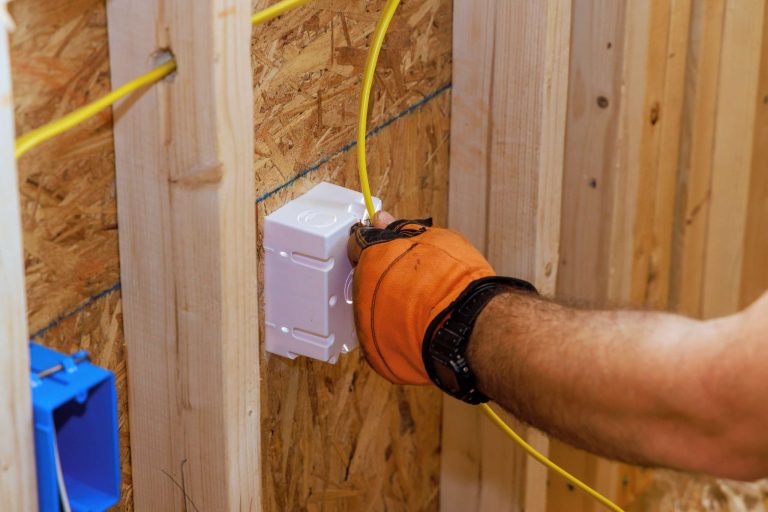
A new electrician should know that it’s not a race and that their initial aim is not to build something impressive but to develop safe habits, but to avoid accidents from the outset. Start with a dead circuit and perhaps a lamp holder, plug, or switch on a dead circuit with low stakes. Lay the tools out on a clear table with good lighting, use insulated handles and avoid anything conductive lying about. All of this allows you to focus on your work instead of on hazards. This calm, deliberate environment teaches discipline long before complex systems enter the picture.
A good initial practice is to construct and deconstruct a simple plug a few times, paying attention to how each component is associated and for what reasons. Pay attention to the amount of insulation to be removed to reveal copper without gouging, and how the conductor should be bent into the terminal screw. Practice for 15 minutes or so, practicing slow, testing each connection by pulling gently to ensure that they are secure. This kind of practice helps establish a sense of familiarity that will serve you well as you work, and any time you are not sure of something, try to visualize the flow of electricity from source to load.
Another error is over-tightening a terminal without properly dressing the wire. The novice might allow loose strands to stick out or trap insulation between the terminal lug and the conductor, causing hot-spots or periodic opens. To repair the problem, the conductor should be cut square, the strands should be twisted into a neat bundle, and the bare copper should be fully under the terminal screw. If it doesn’t look right, fix it instead of trying to force the terminal onto the conductor. Electrical connections should be precision affairs, not hit-or-miss, and a rebuilt connection is an educational one.
When you feel like you can handle a little more complexity, try building a simple circuit, like a switch and a light. Draw a circuit diagram first, then build it to your diagram and then compare the actual circuit to the diagram. When you test it out and the light doesn’t work, don’t just fiddle with things at random. Instead, trace the circuit systematically from where the power comes in to where it goes out and see where the problem is. This kind of problem solving will serve you well when you do more complex wiring.
Keep your practice sessions short. 15-20 minutes a day is fine. It keeps things from getting monotonous, but it also keeps you from getting tired, because tired is when you start making mistakes. When you finish, set everything back to neutral and think about what didn’t go so well. That helps you focus your practice, and it’s the only way to turn your otherwise random fiddling into meaningful learning. From that, you can build up to a point where you’re actually fairly comfortable doing simple electrical jobs safely and competently, which is the only way you’ll get to the point where you can tackle bigger tasks.