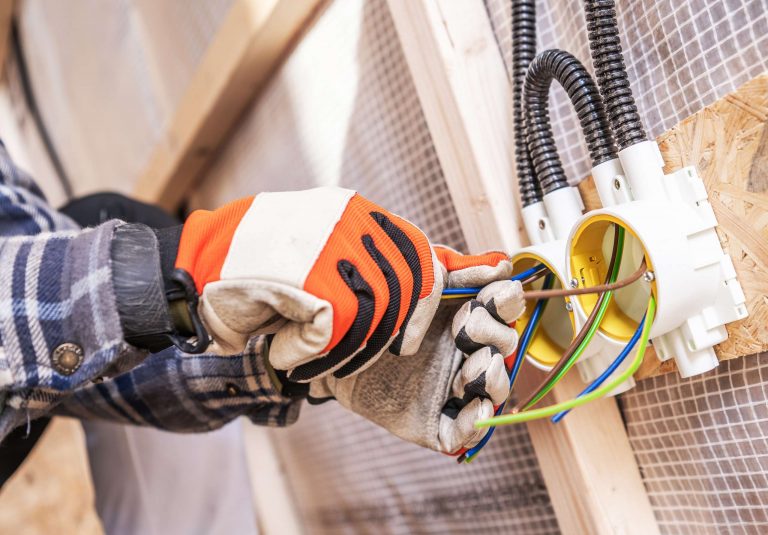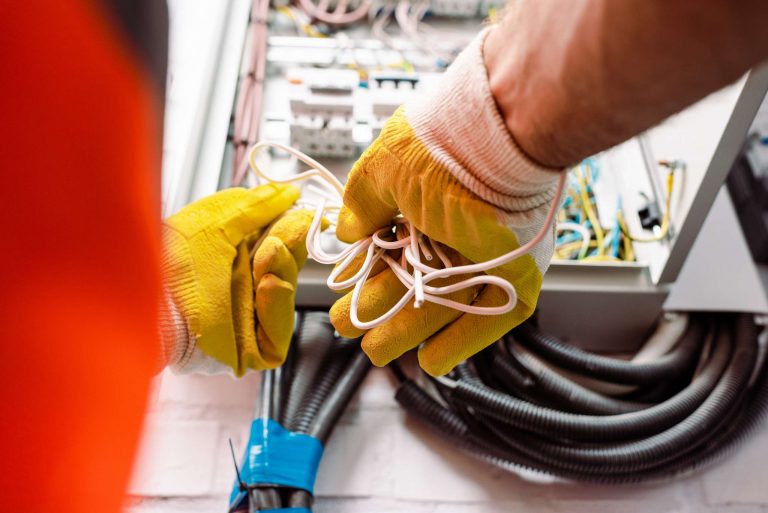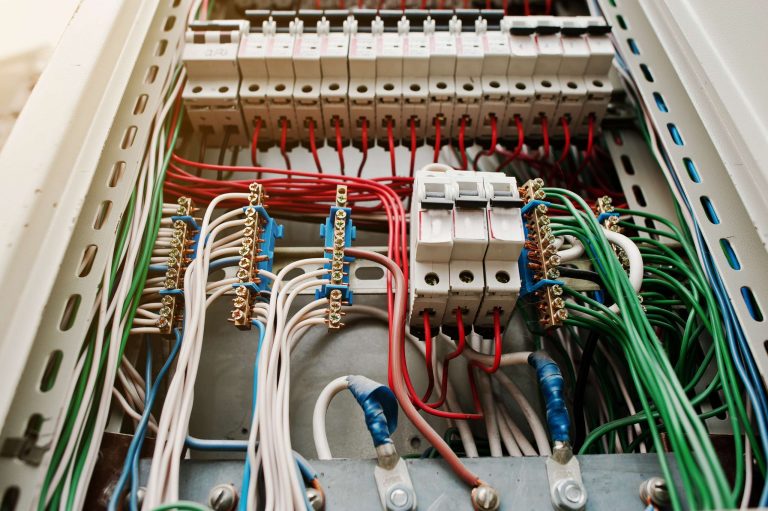
The wiring of a light switch is a classic first-intimidation point for anyone starting out. If it’s your first time you likely have no concept of the inside mechanics since, unlike a plug that simply has two wires, there’s a reason one of these wires should be “broken” to get the intended result. It can be tempting to have them both act the same, as it won’t necessarily kill you or the project, but you won’t be seeing the expected outcome either. Remember, a switch is only meant to control the current that’s reaching your target, so make sure to practice using the “break” principle.
First, let’s look at the simplest form of a single-pole switch, removed from its circuit. We can see the two different terminal connections and think about how current flows into one terminal and out the other when the switch is in a closed position. It can be helpful to take 15 minutes to hook up the switch to a lamp in a purely loose circuit on a table to flip the switch and observe which side of the circuit changes. Then, disconnect it, flip it around, and test again. This helps to illustrate the concept that there is a hot and a neutral and the switch must be on the hot side of the circuit.
The pitfall is, connecting the switch to the neutral wire since they appear to be the same. If the light switches on and off, you might think you’ve done it correctly, but in reality, the fixture is still live when you’ve turned it “off,” and you could get electrocuted when you come to change the light bulb. The solution is to identify which one is the hot wire coming from the supply and connect the switch to that, ensuring only it goes through the switch. If you’re still in doubt, make a diagram of the wiring and then check the wires against that diagram before you put it all together again.
Once you feel comfortable with that, introduce a second switch that operates the same light, but don’t worry about setting up a full multi-way circuit yet. It’s useful to see how the additional wiring lets the light operate. When you get unexpected results, try not to tweak switches randomly. Rather, trace the flow of electricity from the source to the light through all combinations of the switches to find the break. That will teach you the kind of troubleshooting you need when you work on actual wiring projects.
By doing this on a regular basis, but for short periods of time, you will avoid information overload and retain more of what you learn. If you practice for 20 minutes every day putting the switches together, going through the circuits, and finding errors, you will learn the layout much quicker than if you tried to do it for an hour once every couple of weeks. At the end of each practice session, return all the parts back to their normal positions and think about what was different between a configuration that worked and one that did not. After a while you will be able to anticipate the action of the mysterious device, and wiring switches will become a methodical and rational process.